

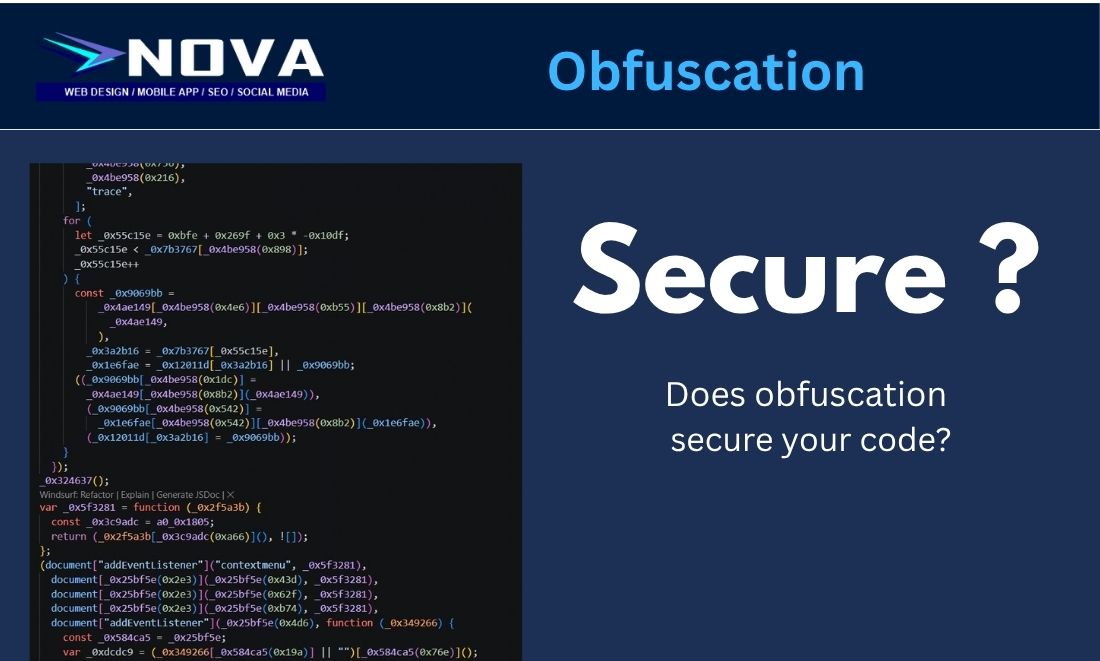
I’ve been seeing this quite often among vibe coders. There seems to be some confusion between protecting code and actually securing an application.
Some vibe coders are overly concerned about their code being copied, so they choose to obfuscate large portions of their codebase. While obfuscation can make code more difficult for another person to read, understand, or reverse-engineer, it does not mean the code is truly secure.
Comparison Between Normal Code Vs Obfuscation Code
| Original Code | Obfuscated Code |
|---|---|
|
|
Real Production Code
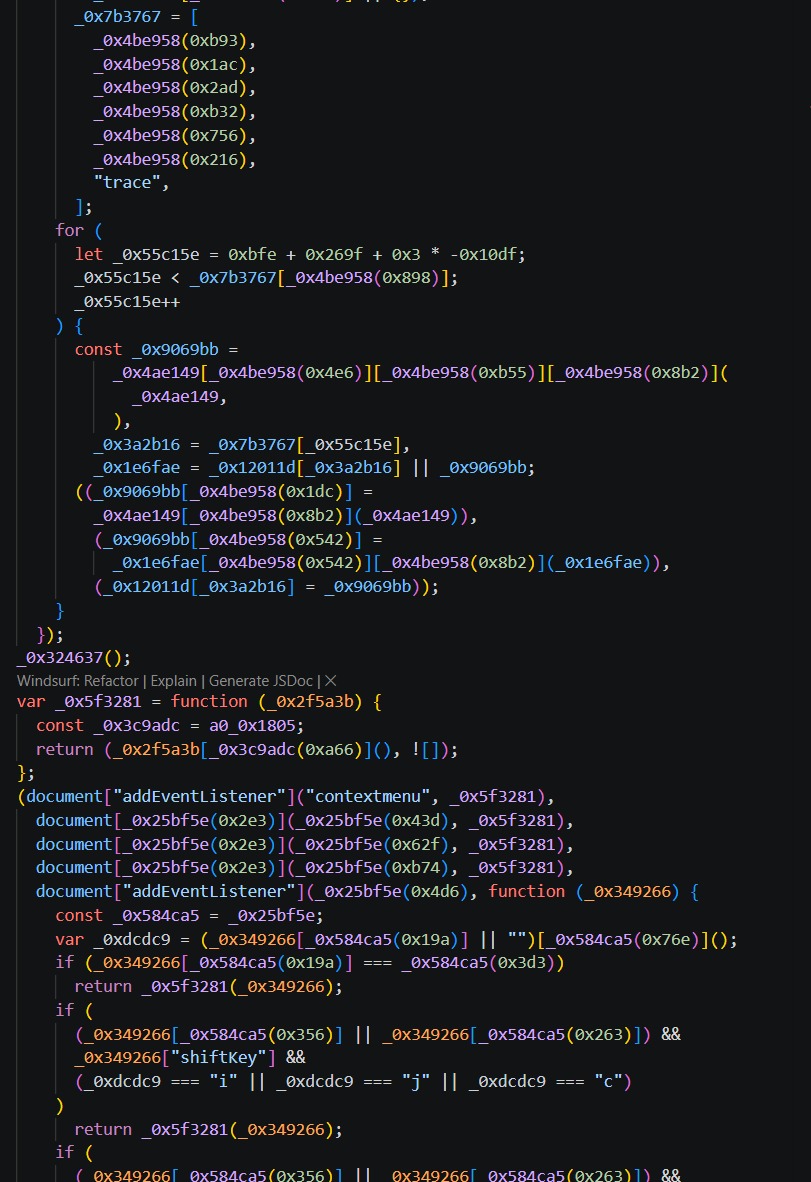
Let’s look at this piece of code:-
- This is hard to debug and read
- Maintenance, debugging and future upgrades can become significantly more difficult.
- If sensitive logic is implemented on the front end, obfuscation does not prevent users from inspecting or analysing it
The key principle is simple:
Making code difficult to read is not the same as making an application secure.
JavaScript can still be inspected even when obfuscated.
When a website loads client-side JavaScript, the code is sent to the user’s browser. Even if variable names are scrambled and the structure is intentionally confusing, a developer can still use browser tools to inspect what the application is doing.
For example, they can:
- Open DevTools and view the JavaScript files
- Set breakpoints while the code is running
- Inspect variables and function calls at runtime
- Monitor network requests and API responses
- Observe what data is sent to the server
- Use formatting or de-obfuscation tools to make the code easier to understand
How to Properly Secure Your Web Application
Why some of the technique not effective
| Technique | What it does | Security level |
|---|---|---|
| Minification | Makes code smaller? Usually the only reason why people implemente this is to make the files smaller and speed up page loading. |
Very low |
| Obfuscation | Makes code difficult to understand Harder to read. Makes code harder to maintain and debug |
Low–moderate |
| Encryption | Protects data using a key Encryption may slow down when loading information. |
High when properly implemented |
| Server-side processing | Keeps sensitive logic away from users Sensitive business logic, API credentials, database operations and authorization checks should normally be handled server-side rather than exposed in browser code. |
Much stronger |
| Authentication / Authorization | Controls who can access resources Have acess and role base. This is good when you want to ensure certain people have specific access to the data |
Essential |
| Code signing / Integrity checks/ SRI/ CSP | Detects modification CSP restricts permitted content sources, while SRI allows browsers to verify that externally loaded resources have not unexpectedly changed. |
Useful additional protection |
How to check your website is secure?
No website can be guaranteed to be 100% secure. The objective of good cybersecurity is to reduce the attack surface, identify vulnerabilities early, protect sensitive information and make successful exploitation significantly more difficult.
Code obfuscation may be useful as an additional layer for protecting intellectual property, but it should never replace proper authentication, authorization, server-side validation, encryption, secure coding practices and regular security testing.
If you would like to identify vulnerabilities in your website or web application, Nova Web Business provides penetration testing and web security assessment services.
If you need help assessing the security of your website, our penetration testing services can help identify potential weaknesses before they are exploited.